How to Decorate Built-In Shelves in Family Room
Nothing anchors a family room like well-decorated built-in shelves. More than just storage, they are a canvas for your personality, blending function with style to create a focal point that draws the eye and ties the room together. Whether your space leans modern, cozy, or eclectic, learning how to decorate built-in shelves in the family room transforms blank cubbies into curated displays that feel intentional and lived-in.
The key is not perfection, it is balance. With the right mix of height, texture, color, and personal meaning, your shelves can tell a story while keeping clutter at bay. This guide walks you through every step, from clearing the slate and choosing your aesthetic to layering decor, adding greenery, and maintaining the look long-term.
Start with a Clean Slate
Before styling begins, strip everything out. A fresh start is essential for seeing your shelves with new eyes.
Remove All Items Completely
Take out every book, frame, vase, and knickknack. This breaks the habit of arranging around what is already there, what designers call tunnel vision. When you clear the shelves, you create space for creativity and intentionality.
Clean Surfaces Thoroughly
Wipe down each shelf with a wood-safe cleaner, especially if you have wooden built-ins. Dust, fingerprints, and grime build up over time and can dull finishes or stain decor.
• Use a microfiber cloth to avoid scratches
• For corners and edges, try a soft-bristle brush or compressed air
• Let surfaces dry completely before restyling
Place a drop cloth or towel on the floor below to catch dust and protect flooring during cleaning.
Define Your Design Aesthetic
Your shelves should reflect the overall vibe of your family room. Choosing a style first prevents a haphazard look.
Choose a Cohesive Style
Common family room aesthetics include:
• Minimalist: neutral tones, clean lines, limited decor
• Modern: sleek materials, bold accents, geometric shapes
• Organic/Natural: wood, stone, linen, earthy textures
• Eclectic: mix of eras, colors, and global influences
• Traditional: classic furniture, symmetry, rich wood tones
• Boho: layered textures, plants, global patterns
• Coastal: light woods, blues, whites, natural fibers
Even in eclectic styling, maintain a unifying thread like warm wood tones or a neutral base palette.
Match the Room Energy
If your family room is high-traffic and kid-friendly, lean into durable, forgiving materials like baskets and faux plants. For a more formal lounge area, consider art pieces, sculptural vases, and symmetrical arrangements.
Anchor with Substantial Pieces

Start styling by placing large, visually heavy items that act as anchors.
Place Foundational Decor First
These items establish balance and draw the eye:
• Large framed artwork or mirrors
• Tall vases or ceramic bowls
• Woven baskets (seagrass, rattan)
• Stacked hardcover books
• Sculptural objects or bookends
Group similar anchor items together first so you can compare sizes and textures before placing.
Avoid Grid-Like Alignment
Do not line up large pieces directly above or beside each other. Instead, stagger them across shelves for a dynamic flow. Place a tall vase on the top left, then a large basket on the middle right. This creates visual movement and prevents monotony.
Apply the Rule of Thirds and Odd Numbers

Balance is not accidental, it is designed using proven principles.
Divide Shelves into Thirds
Mentally split each shelf into three equal sections. Place key groupings at the intersection points, like the rule of thirds in photography. This creates natural focal zones and works especially well for asymmetrical arrangements.
Group in Odd Numbers
Use three or five items per cluster for a more pleasing composition. Odd-numbered groups create visual tension and interest, while even numbers can feel static. Use small trays to contain clusters and keep them feeling intentional.
Vary Height, Texture, and Shape
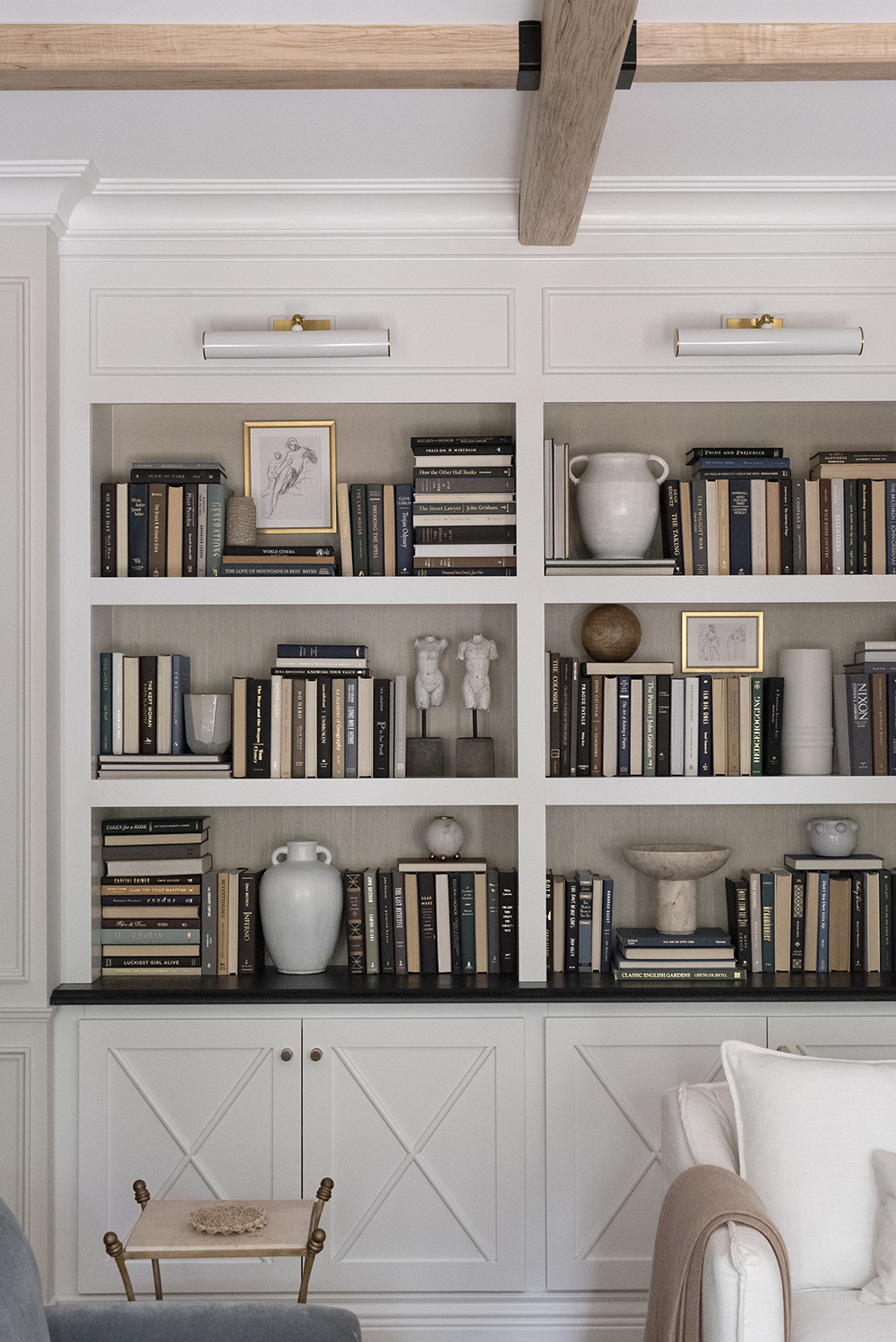
Monotony kills style. Diversity brings shelves to life.
Mix Heights Strategically
Combine tall items like lamps and tall vases with medium items like framed photos and boxes, and short items like candles and small sculptures. Elevate short decor by placing it on top of stacked books for instant height and dimension.
Layer Different Textures
Blend surfaces to add richness. Too much shine feels cold, while too much matte feels flat. Aim for a 60/40 balance between smooth and rough finishes.
Include Diverse Shapes
Avoid repeating the same form. Mix round vases and bowls with square boxes and frames, rectangular trays and prints, and organic shapes like driftwood and trailing plants. Overuse of one shape creates rigidity.
Layer for Depth and Dimension
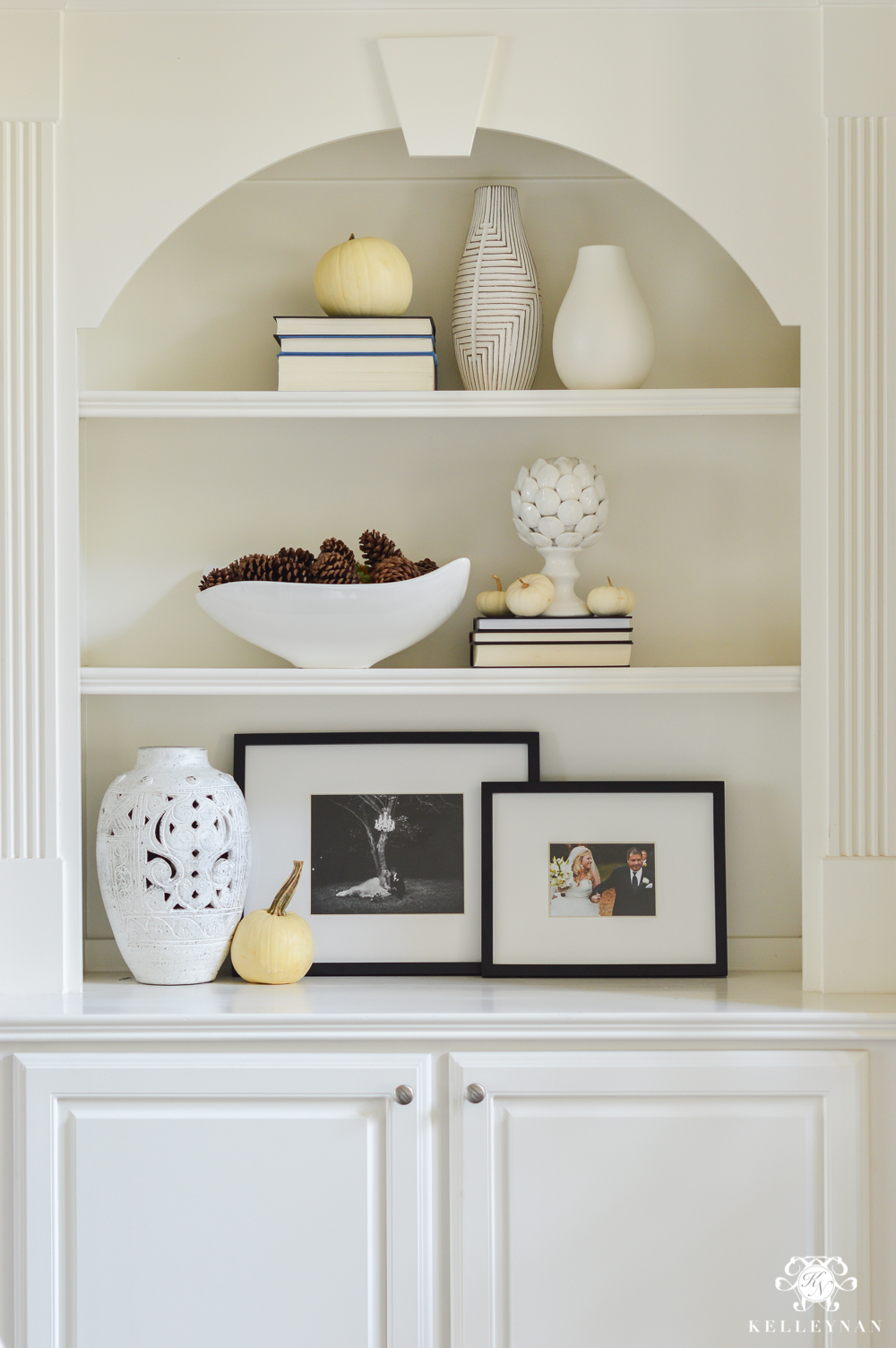
Flat arrangements look staged. Depth makes shelves feel collected, not curated.
Create Front-to-Back Layers
Place larger items in back and smaller ones in front. A stack of books in back with a candle slightly overlapping in front mimics how objects naturally gather in real life.
Use Trays and Boxes
Trays corral small items and add structure. Use metal, wood, or ceramic trays and open boxes for hidden storage and visual contrast. Place a tray on a shelf, then layer books and a small plant on top to create multiple levels of interest.
Add Greenery for Life and Softness
Plants bring warmth, color, and vitality to built-ins.
Choose Real or Faux Wisely
Both work depending on your lifestyle. Real plants add oxygen and freshness but require care. Faux plants need no watering and zero maintenance, and high-quality options are indistinguishable from real ones.
Never water plants directly on wooden shelves. Remove, water elsewhere, dry completely, then return.
Style Greenery Naturally
Place one tall plant on one side and a trailing vine on the other for balance. Use faux greenery in hard-to-reach spots or high-traffic areas. Mix real and fake, and no one will know the difference.
Style Books Like a Designer
Books are more than reading material, they are design tools.
Arrange for Visual Impact
Stack some books horizontally and others vertically. Use horizontal stacks as bases for decor like a vase on top of books. Alternate orientations for rhythm.
Control Color with Spine Tricks
For a neutral look, turn colorful spines backward. Use neutral-spined books in beige, gray, or black for cohesion. Remove dust jackets to reveal true spine color.
Source decor books affordably from thrift stores, library sales, estate sales, and garage sales. It is fine to display books you have read or do not plan to read since they are decor, not a reading list.
Infuse Personal Meaning
The best shelves feel uniquely yours. Add emotional depth.
Display Meaningful Objects
Include family photos in frames or printed strips, children is artwork rotated seasonally, travel souvenirs, heirloom pieces like vintage clocks or handmade pottery, and handwritten recipes framed in small shadow boxes.
Rotate Seasonally
Keep the display fresh without starting over. Swap in holiday cards in December, add seashells in summer, and display fall leaves or pumpkins in autumn. Store seasonal items in labeled bins under the TV console or in a closet.
Use Frames to Break Up Space
Frames are not just for photos, they are design elements.
Add Height and Visual Breaks
Tall, narrow frames add verticality. Place them between clusters to separate busy areas. Use a mix of orientations, some vertical and some horizontal.
Mix Frame Materials
Combine wood, black metal, gold or brass, and bone inlay or ceramic. Avoid matching frames in a row. Instead, scatter different styles across shelves for organic charm.
Maintain a Cohesive Color Palette
Color ties everything together. Without it, shelves feel chaotic.
Choose a Dominant Scheme
Popular family room palettes include neutrals like beige, gray, white, and taupe, earth tones like rust, olive, terracotta, and cream, monochrome with all black and white with texture, and bold accents like navy with mustard or emerald with gold.
Pull one color from your rug, sofa, or artwork and repeat it on the shelves.
Add Pops of Color Sparingly
Use accent colors in small doses like a rust-colored vase, emerald green book spines, or a teal ceramic bowl. The rule of thumb is 70% neutral, 20% secondary color, and 10% accent.
Follow the Styling Do is and Don ts
Avoid common mistakes with these quick-reference rules.
Do is
• Shop your home first by looking in bedrooms, hallways, or storage for hidden gems
• Embrace imperfection since shelves should feel lived-in, not museum-perfect
• Mix vintage and modern as contrast adds character
• Use trays to organize small items and define clusters
• Step back often to check balance from a distance
Don ts
• Do not rush the process since experimentation takes time
• Do not go matchy-matchy by avoiding identical vases, frames, or baskets
• Do not overcrowd and leave breathing room between items
• Do not buy everything new since thrifted and inherited items add soul
• Do not ignore scale since large shelves need big items and small cubbies suit delicate decor
Preserve Shelf Integrity Long-Term
Beauty means nothing if your shelves get damaged.
Protect Wooden Surfaces
Never place wet items on wood. Use coasters under vases or plant pots. Dust weekly with a microfiber cloth and clean with wood-safe products only.
Rotate and Refresh
Swap out decor every three to six months. Update for seasons, holidays, or life changes. Keep a shelf swap bin for easy rotation. Take a photo of each refresh to track what works and what does not.
Final Review: Step Back and Refine
The last step is the most important.
Assess from a Distance
Stand six to ten feet away and check left-to-right balance. Scan for overcrowding or empty gaps. Look for repeating shapes or colors. Ask yourself if the arrangement feels intentional.
Viewing your shelves in 2D often reveals imbalances you miss in person.
Make Final Adjustments
Remove one item if it feels cluttered since less is more. Shift a tall piece to fill a visual void. Re-angle a frame or plant for better sightlines. Great shelf styling is not about rules, it is about how it makes you feel. If you love it, it works.
Frequently Asked Questions About Decorating Built-In Shelves in Family Room
What is the best way to start decorating built-in shelves?
Start by removing everything from the shelves completely. This gives you a blank canvas and prevents tunnel vision. Clean the surfaces thoroughly, then assess your design aesthetic before placing any items.
How do I create visual balance on my shelves?
Apply the rule of thirds by mentally dividing each shelf into three equal sections and placing key groupings at intersection points. Group items in odd numbers like three or five per cluster. Stagger large pieces across shelves rather than aligning them in a grid.
Should I use real or faux plants on built-in shelves?
Both work well depending on your needs. Real plants add freshness but require care and must never be watered directly on wooden shelves. Faux plants offer zero maintenance and high-quality options look nearly identical to real ones.
How do I make my shelves look less cluttered?
Leave breathing room between items and avoid overcrowding. Step back frequently to assess balance. Remove one item if the arrangement feels too busy. Less is often more when styling shelves.
How often should I refresh my shelf decor?
Rotate and refresh shelf decor every three to six months. Update for seasons, holidays, or life changes like a new baby. Keep a swap bin for easy rotation without starting from scratch.
Key Takeaways for Decorating Built-In Shelves in Family Room
Your family room built-ins are more than storage, they are a reflection of your life. Start with a clean slate by removing all items and cleaning surfaces thoroughly. Define your design aesthetic first to ensure cohesion across the entire unit.
Anchor your shelves with substantial pieces like large vases, baskets, and framed art before adding smaller items. Apply the rule of thirds and odd-number groupings for balanced, dynamic arrangements. Vary height, texture, and shape to create visual interest and prevent monotony.
Layer items front-to-back for depth and dimension, and use trays to corral small objects. Incorporate greenery strategically, choosing real or faux plants based on your lifestyle and maintenance preferences. Infuse personal meaning with family photos, heirlooms, and travel souvenirs that tell your unique story.
Now go style with confidence. Your curated, visually engaging, and deeply personal built-in shelves await.