
How to Use a Dresser: Simple Steps
You bought a new dresser, or maybe you have had the same one for years, but it is overflowing, disorganized, or simply not working for your daily routine. If you spend more time digging than dressing, you are not alone. Millions of people treat dressers like catch-all bins, stuffing clothes inside and hoping for the best.
A dresser is more than storage. It is a system. When used correctly, it saves time, reduces stress, and makes getting ready feel effortless. This guide reveals how to assign purpose to every drawer, fold clothes for instant visibility, lock organizers in place, and maintain a system that actually lasts.
Assign Each Drawer a Purpose
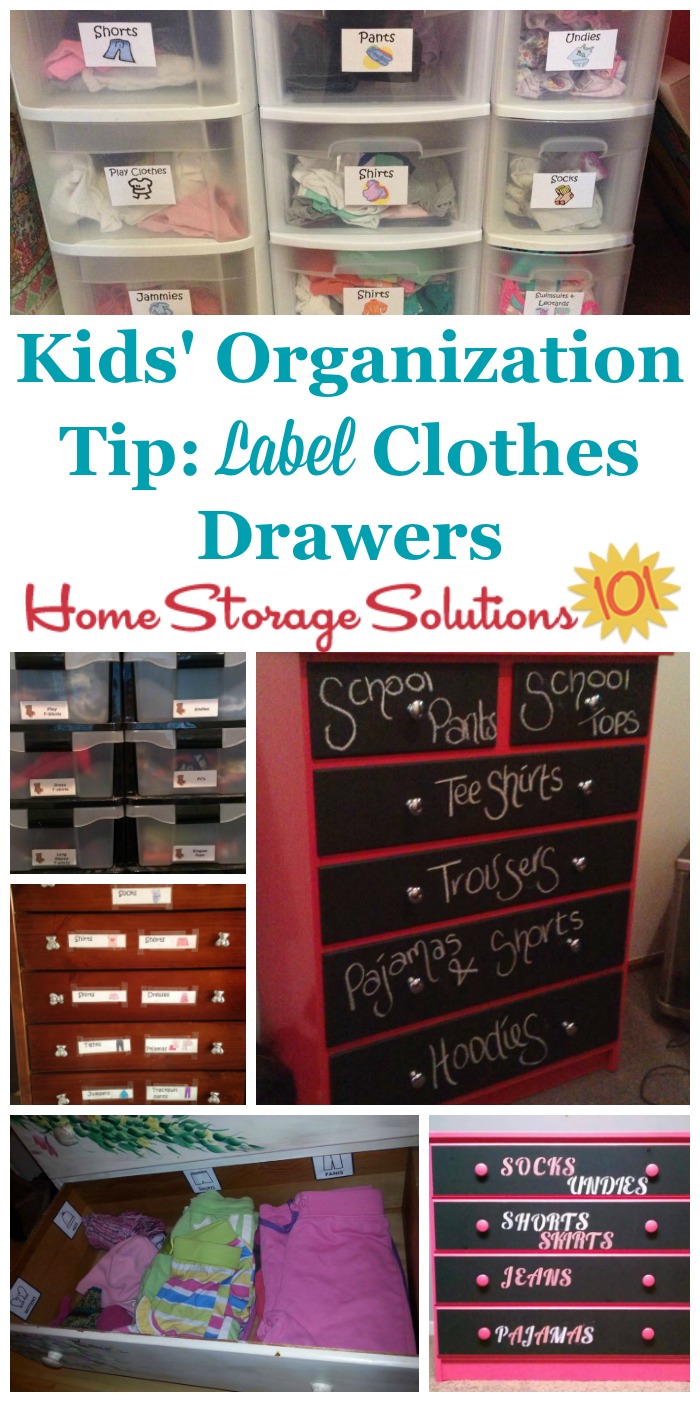
A well-used dresser starts with intention. Every drawer should have a clear job, with no guessing and no chaos. When drawers lack defined roles, clutter creeps in fast.
Pick One Categorization Strategy
Choose a single organizing logic and stick with it. Mixing systems leads to confusion.
- By Clothing Type: Dedicate one drawer to socks, another to underwear, and another to t-shirts. Simple and effective for daily essentials.
- By Color: Ideal if you mix and match often. A white drawer, black drawer, and neutral drawer make outfit pairing instant.
- By Activity: Sleepwear, gym clothes, or work-from-home attire each get their own space. Great for reducing decision fatigue.
- By User: In shared bedrooms, rows of rolled clothes act as natural dividers. No physical barriers needed, just neat rolls separating your items from your partner’s.
- For Non-Clothing Items: Reserve a drawer for travel kits, chargers, or kids’ toys. Use lidded boxes to keep small items from scattering.
Audit What Belongs
Before organizing, ask whether each item belongs in a dresser at all. Heavy sweaters belong in a wardrobe. Shoes belong on a shoe rack. If something does not fit the function, move it out.
Pro Tip: Label drawers with sticky notes during planning. Test the system for one week, then adjust before committing.
Empty and Declutter Completely
You cannot organize clutter. You must remove it first.
Pull Everything Out
Empty every drawer, including the messy bottom one. Seeing all your items at once reveals over-ownership. That pile of 15 t-shirts you never wear is now visible and undeniable.
Keep, Donate, or Relocate
Sort items into three clear piles:
- Keep: Daily-use, favorite, or seasonally worn items.
- Donate or Toss: Stained, worn, or unused clothes, such as pajamas from three years ago.
- Relocate: Items that belong elsewhere, like belts to a closet or scarves to a bin.
Common culprits: Old workout gear, mystery socks, and backup underwear you never reach for.
Consolidate When Possible
After decluttering, you may find you only need half the drawers. This means you could downsize from two dressers to one, freeing up valuable floor space in small rooms.
Test the New System
Wait 30 days before calling the project done. During this check-in, ask:
- Are you struggling to find things?
- Are drawers too full or too empty?
- Did clutter return?
Adjust now before habits solidify.
Fold Clothes Vertically Instead of Horizontally

This is the game-changer. Forget stacking. Stand clothes up.
Use the Roll, Fold, and Stand Method
- Fold or roll each item into a compact rectangle.
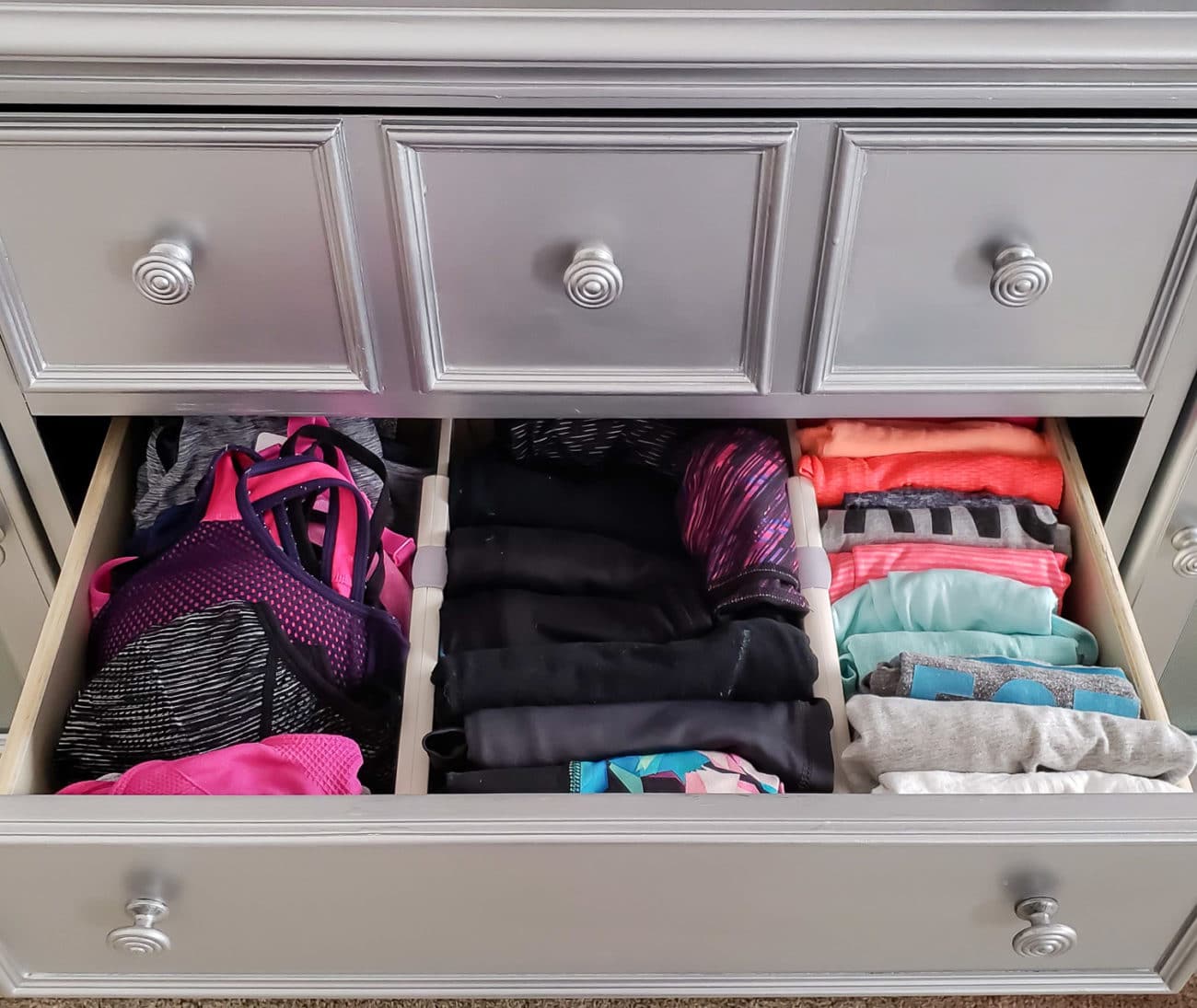
- Place it upright in the drawer, side-by-side, like files in a cabinet.
- Fill the row front to back.
Why it works:
- See every item at a glance.
- Pull one out without toppling the rest.
- Fit 20 to 30 percent more than stacking.
Best for: T-shirts, pants, pajamas, socks, and underwear.
Follow the 90% Capacity Rule
Fill drawers to about 90% full. Not less. Not more.
- Too empty invites clutter over time.
- Too full makes drawers hard to open and use.
This sweet spot keeps drawers functional and visually calm.
Avoid Over-Complicated Folds
Skip the elaborate puffball folds if they take two minutes each. Use simple, consistent rectangles. Speed matters, and your system should save time, not add chores.
Install Drawer Organizers That Stay Put
Even the best folds fail without structure. Organizers maintain order, but only if they do not slide around.
Choose the Right Organizer
Use these market-tested options based on drawer size:
| Product | Size (Inches) | Best For | Price |
|---|---|---|---|
| SKUBB Box | Set of 6 | Small items, underwear | $8.99 |
| BAXNA Organizer | 10.25 x 13.5 x 4 | Standard drawers | $9.99 |
| BAXNA Deep | 10.25 x 13.5 x 7 | Bulkier items (2+ units) | $11.99 |
| RAGGISAR Tray | 15.75 x 11.75 | Large, flat storage | $17.99 |
| KOMPLEMENT Box (Large) | 9.75 x 10.5 x 4.75 | Sweaters, accessories | $12.99 (2-pack) |
| KOMPLEMENT Box (Narrow) | 6 x 10.5 x 4.75 | Socks, ties, cords | $9.99 (2-pack) |
Lock Organizers in Place
Problem: Bins shift when you open the drawer.
Fix: Apply a pea-sized drop of hot glue to the bottom corners of the organizer. Press it into the drawer. It holds firm during normal use but can be pried up if you need to reconfigure.
Why it works: It counters inertia and eliminates the shifting bin problem.
Use Trays for Small Items
Keep jewelry, watches, and hair clips in small open trays. No more digging for earrings. For travel kits or cords, use lidded boxes that look neat even when the drawer is open.
Zone Drawers by Frequency and Use
Not all drawers are equal. Use vertical space wisely.
Top Drawers: Daily Essentials
Put what you use every morning here:
- Underwear
- Socks
- T-shirts
- Sleepwear
Benefit: No bending and a faster routine.
Middle Drawers: Regular-Use Clothing
Store these items here:
- Pants
- Long-sleeve shirts
- Activewear
- Work-from-home outfits
Organize by type or color. Use dividers if the drawer is shared.
Bottom Drawers: Seasonal or Bulky Items
Keep off-season clothes here:
- Winter sweaters
- Heavy pajamas
- Beach towels (if no linen closet exists)
Do not overfill these drawers. If bulky items make the drawer hard to open, move them elsewhere.
Remove Off-Season Items
Keep only what you are currently wearing in the main drawers. Store off-season clothes in:
- Under-bed bins
- Closet shelves
- Vacuum bags
Result: Lightly packed drawers that stay easy to use year-round.
Maintain Your System Long-Term
Organization is not a one-time project. It is ongoing maintenance.
Do a Monthly Check-In
Set a calendar reminder and ask:
- Are you using the system?
- Did clutter return?
- Is anything hard to reach?
Tweak before small issues become big ones.
Rotate Seasonally
Twice a year:
- Empty bottom drawers.
- Swap in next season’s clothes.
- Clean the drawer interior.
- Donate items no longer worn.
Refresh the Anti-Slip Glue
If you move organizers often, the hot glue may wear out. Reapply every 6 to 12 months to keep bins secure.
Label for Accountability
In shared homes, label drawers or use color-coded bins:
- Blue roll for Partner A
- Pink roll for Partner B
- Green box for kids’ accessories
Labels reduce arguments and reinforce the system.
Frequently Asked Questions About Using a Dresser
What should you put in each drawer of a dresser?
Assign each drawer a single category such as socks, underwear, t-shirts, or pajamas. Top drawers should hold daily essentials, middle drawers regular-use clothing, and bottom drawers seasonal or bulky items. Keeping categories consistent prevents clutter from creeping back.
How do you fold clothes so they fit more in a dresser?
Use the roll, fold, and stand method. Fold or roll each item into a compact rectangle, then stand it upright side-by-side in the drawer. This vertical filing approach fits 20 to 30 percent more than horizontal stacking and lets you see every item at once.
How do you keep dresser organizers from sliding?
Apply a pea-sized drop of hot glue to the bottom corners of each organizer, then press it firmly into the drawer. The glue holds the bin in place during normal use but can be pried up if you need to reconfigure. Reapply every 6 to 12 months if bins are moved often.
What goes in the top drawer of a dresser?
The top drawer should hold items you reach for every morning, such as underwear, socks, t-shirts, and sleepwear. Placing daily essentials up top eliminates bending and speeds up your morning routine.
How often should you declutter a dresser?
Do a quick check-in once a month to confirm the system still works. Perform a full seasonal rotation twice a year by emptying bottom drawers, swapping in next season’s clothes, and donating anything no longer worn.
Can a dresser hold non-clothing items?
Yes. Reserve a drawer for travel kits, chargers, spare keys, or kids’ toys. Use sturdy lidded boxes to keep small items contained and the drawer looking tidy even when open.
Key Takeaways for Organizing Your Dresser Like a Pro

A dresser works best when every drawer has a defined purpose, every item earns its place, and every fold stands upright for visibility. Start by emptying everything, decluttering ruthlessly, and assigning categories that match your daily routine. Lock organizers in place with hot glue, follow the 90% capacity rule, and check in monthly to keep the system running smoothly.
Your next step is simple. Pick one drawer today. Empty it. Declutter it. Fold the contents vertically. Add a stable organizer. Tomorrow, do the next drawer. Within one week, your entire dresser will transform into a daily efficiency tool that saves you time, reduces stress, and makes getting dressed something you actually enjoy.