

How Thick Should Kitchen Floating Shelves Be?
Floating shelves in the kitchen need to be more than just stylish. They must support heavy dishes, cookware, and daily use without sagging or failing. The right thickness ensures your shelves stay level, safe, and durable for years. So, how thick should floating shelves be in the kitchen? For most applications, 1.75 to 2 inches is the ideal range. Thinner shelves may look sleek but risk sagging under real kitchen loads, while thicker options up to 2.5 inches offer maximum strength and visual impact.
This guide breaks down the exact thickness you need based on shelf depth, material, load, and design style. Whether you are installing a minimalist spice rack or a heavy-duty display for cast iron, you will learn how to choose the perfect thickness for safety, function, and aesthetics.
Recommended Thickness for Kitchen Shelves
Kitchen shelves endure more stress than shelves in other areas of your home. A 36-inch shelf stacked with dinner plates, glasses, and cookbooks can easily carry 40 to 60 pounds. That weight, spread over time, stresses the shelf is center, especially if it is too thin.
Standard Kitchen Load Requirements
Kitchens demand stronger shelves than other rooms. The weight from stacked dishes and cookware creates constant downward pressure that thin shelves cannot handle over time.
• Minimum functional thickness: 1.75 inches. Anything less risks visible sagging, even with strong brackets.
• Ideal range: 2 inches. This offers the best balance of strength, durability, and clean appearance.
• Heavy-duty use: 2 to 2.5 inches. Best for deep shelves of 12 inches or more or when storing pots and appliances.
Expert Insight states that a shelf thinner than 1.5 inches will almost certainly sag in a kitchen environment, making strength the priority.
Thickness by Use Case
Choosing the right thickness depends on what you plan to store on your kitchen shelves.
| Use Case | Recommended Thickness | Why It Matters |
|---|---|---|
| Light storage (spices, mugs, decor) | 1.5 to 1.75 inches | Acceptable only with short spans of 24 inches or less and light loads |
| Standard storage (plates, glasses, cookbooks) | 1.75 to 2 inches | Ideal for 30 to 48 inch shelves with moderate to heavy loads |
| Heavy storage (pots, small appliances) | 2 to 2.5 inches | Prevents deflection on deep or long shelves |
Rule of thumb: If you are storing anything heavier than books, go at least 1.75 inches thick.
Bracket Compatibility and Shelf Thickness

Your shelf must be thick enough to fully house the mounting hardware, especially the steel support rods that give floating shelves their clean look.
Match Bracket Type to Shelf Thickness
Different bracket types require different minimum thicknesses to function properly and securely.
| Bracket Type | Min Shelf Thickness | Best For |
|---|---|---|
| Light Duty | 1.25 inches | Decor, entryways (not kitchens) |
| Medium Duty | 1.5 inches | Mugs, spices, light use only |
| Heavy Duty | 1.75 inches | Standard kitchen loads |
| Xtra Duty | 2.0 inches | Deep shelves, heavy cookware |
| Floating Desk Brackets | 1.5+ inches | Countertop extensions, islands |
Critical Tip: A thickness under 1.75 inches makes it very difficult to drill deep, straight channels for steel rods. Set screws need vertical clearance through the shelf into the rod, and this is only possible with 1.75 inches or more of thickness. Thin shelves risk exposed hardware or cracked edges during installation.
Material Type and Required Thickness

The material you choose determines how much strength you get per inch of thickness. Some materials need to be thicker to achieve the same load capacity as others.
Solid Wood Shelves
Solid hardwood is the gold standard for kitchen floating shelves because it is naturally strong and resists warping when properly sealed.
• Best woods: White Oak, Walnut, Maple, Alder
• Recommended thickness: 1.75 to 2.5 inches
• Pros: Naturally strong, resists warping, beautiful grain
• Cons: More expensive, requires sealing
Pro Tip: A 2-inch thick solid oak shelf can support over 100 pounds without sagging when properly mounted into studs.
Plywood Shelves
Plywood offers a budget-friendly alternative to solid wood, but it requires construction techniques to achieve adequate strength.
• Best for: Budget builds, painted finishes, DIY projects
• Recommended thickness: 18 to 25 mm per layer. Use two glued layers for a 2-inch total thickness.
• Edge banding required to hide layers and improve finish
Source Insight recommends using two layers of 18 mm plywood glued together to create a warp-resistant, strong core. Avoid single-layer 3/4 inch plywood, as it is too weak for kitchen loads.
Avoid These Materials in Kitchens
Not all shelf materials can handle kitchen conditions. Some materials sag under weight while others absorb moisture and fail.
• MDF: Sags under weight, swells with moisture
• Particleboard: Weak, breaks easily, not moisture-resistant
• Hollow-core: Lacks rigidity unless reinforced internally
Shelf Depth vs. Thickness: The Proportion Rule
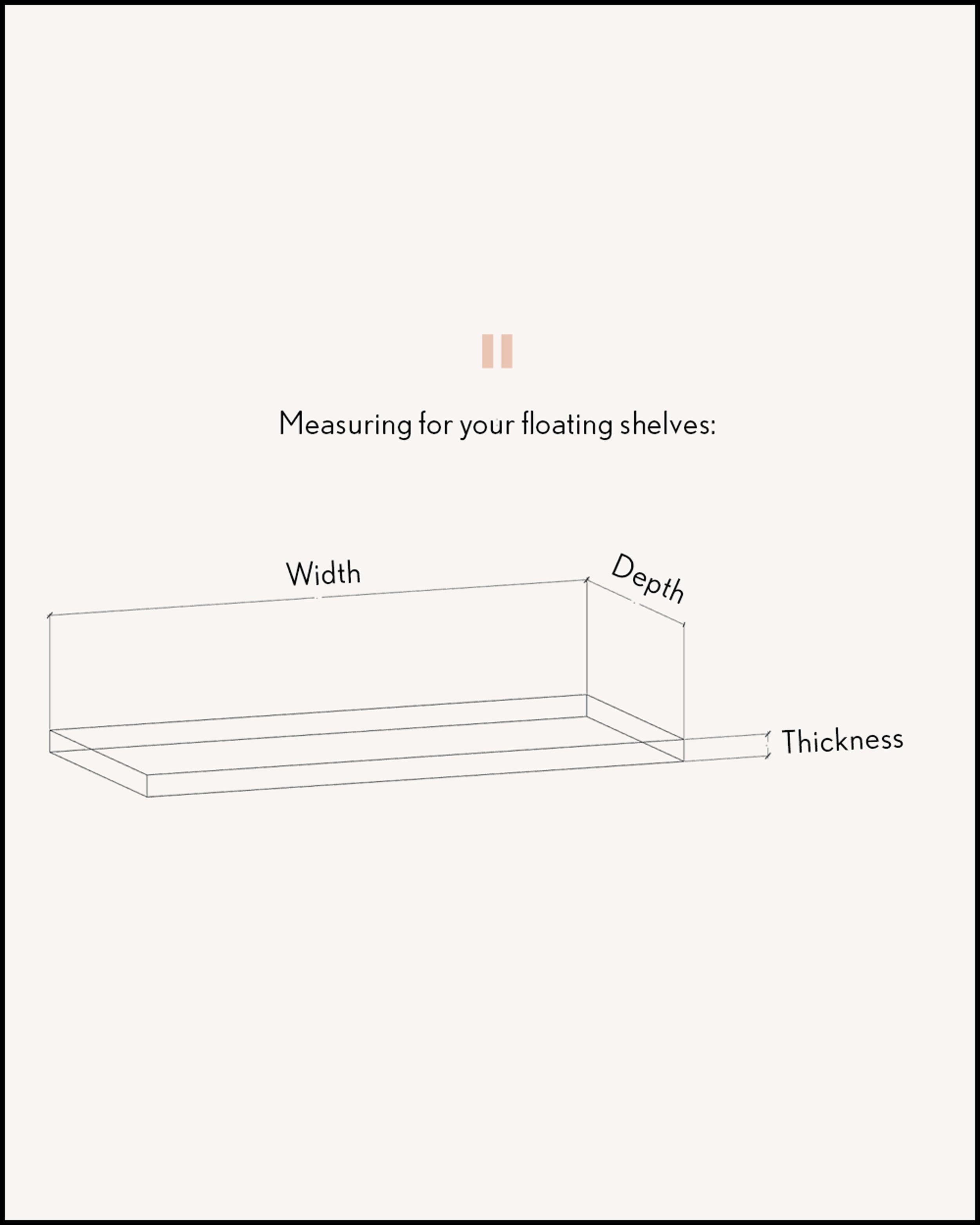
Depth and thickness must be balanced for both strength and visual appeal. A shelf that is too thin for its depth looks flimsy and will eventually sag.
Recommended Depth for Kitchen Shelves
| Depth | Use Case | Min Thickness |
|---|---|---|
| 8 inches | Spices, mugs | 1.5 to 1.75 inches |
| 10 inches | Plates, glasses, books | 1.75 to 2 inches |
| 12 inches | Bowls, pots, appliances | 2 to 2.5 inches |
| 14+ inches | Countertop extension | 2.5+ inches with blocking |
Design Rule: Follow a 1:5 thickness-to-depth ratio. Example: A 10-inch deep shelf should be at least 2 inches thick to avoid looking flimsy. A 10-inch deep shelf that is only 1 inch thick will look flimsy and underwhelming.
Installation Best Practices for Strength
Even the perfect shelf thickness can fail if not installed correctly. Proper mounting is what transforms a floating shelf from a decorative piece into a functional storage solution.
Anchor Into Studs
Never mount kitchen floating shelves into drywall alone. Drywall cannot support the weight of loaded kitchen shelves.
• Minimum: Secure into two wall studs
• Weight per stud: Up to 50 pounds with heavy-duty brackets
• Avoid drywall anchors: They fail under kitchen loads
Install Horizontal Blocking
Blocking is the strongest method for installing floating shelves. Cut 2x4s to fit between studs behind the shelf location, then screw brackets into the solid wood blocking instead of just drywall.
• Allows every screw hole to be anchored securely
• Results in up to 2x load capacity compared to stud-only mounting
Best Practice confirms that blocking is by far the strongest way to install a floating shelf.
Tools You Will Need
Having the right tools ensures a professional-quality installation.
• Stud finder: Locate studs behind walls
• 4-foot level: Ensure perfect horizontal alignment
• Drill and bits: Create pilot holes, drive screws
• Screwdriver or driver bit: Tighten into studs
• Tape measure: Mark shelf spacing
• Wood shims: Fix uneven walls
• Clamps: Hold glued layers during assembly
Aesthetic Styles and Ideal Thickness
While strength is paramount, your shelves should also match your kitchen is design style. Thickness contributes significantly to the overall visual weight and feel.
Match Shelf Thickness to Design Style
| Style | Recommended Thickness | Why It Works |
|---|---|---|
| Minimalist / Modern | 1.5 to 1.75 inches | Clean lines, lets items stand out |
| Farmhouse / Rustic | 2 to 3 inches | Chunky, warm, makes a statement |
| Industrial | 1.75 to 2.25 inches | Pairs well with steel brackets |
Design Insight states that a 3-inch thick oak shelf makes a powerful statement. Live edge shelves often go 2.5 to 3 inches thick, but they must be sealed against grease and moisture to survive in a kitchen environment.
Protect Against Kitchen Moisture and Heat
Kitchens expose shelves to steam, grease, and temperature swings. Even strong wood can warp or stain without proper protection.
Best Finishes for Kitchen Shelves
| Finish | Benefits | Best For |
|---|---|---|
| Polyurethane (satin) | Moisture-resistant, durable, clear | Natural wood grain |
| Painted finish | Easy to clean, hides imperfections | Plywood, MDF (if used) |
| Oil-based finishes | Penetrates wood, enhances durability | High-humidity areas |
Critical: Never leave wood unfinished in the kitchen. Reapply sealant every 2 to 3 years for long-term protection against grease buildup and moisture exposure.
Weight Capacity and Safety Limits
Understanding weight limits helps you plan shelf contents and ensures safe use over time.
Max Load by Shelf Length
| Length | Studs Used | Max Safe Load |
|---|---|---|
| 24 inches | 2 | 90 to 100 lbs |
| 36 inches | 3 | 135 to 150 lbs |
| 48 inches | 3 to 4 | 180 to 200 lbs |
These capacity numbers assume a 1.75-inch or thicker shelf, heavy-duty brackets, and anchoring into studs or blocking.
Load Distribution Tips
How you arrange items on your shelf affects its longevity and safety.
• Place heavier items (plates, books) closer to mounting points
• Avoid loading the front edge or ends of the shelf
• Never exceed 80% of rated capacity for long-term safety
Common Mistakes to Avoid
Learning what not to do protects your investment and ensures your shelves perform well for years.
1. Using 1-Inch Thick Shelves
A 1-inch thick shelf will sag within months under kitchen loads. Always upgrade to at least 1.75 inches for any kitchen shelf over 24 inches in length.
2. Mounting into Drywall Only
Drywall cannot support the weight of loaded kitchen shelves. The shelf will pull out under load, potentially causing damage or injury. Always hit studs or install blocking.
3. Ignoring Stud Alignment
If only one stud lines up with your shelf placement, that single stud carries most of the weight. Plan shelf length to align with two or more studs for balanced support.
4. Skipping Edge Finishing (Plywood)
Exposed plywood layers look unprofessional and can delaminate over time. Use iron-on edge banding or solid wood strips to create a finished look.
5. Overloading Deep Shelves
Deep shelves create more leverage, increasing stress on the mounting system. Use 2-inch or thicker shelves and blocking for depths of 12 inches or more.
Key Takeaways for Kitchen Floating Shelf Thickness
• 1.75 inches is the minimum for kitchen shelves. 2 inches is ideal for most applications.
• Match thickness to depth and load. Deeper shelves require thicker material.
• Use solid hardwood or laminated plywood. Avoid MDF and particleboard.
• Always mount into studs or blocking. Never rely on drywall alone.
• Seal all wood to protect against grease and moisture damage.
• Thicker shelves resist sagging 8 times better than thin ones due to the cube rule.
When in doubt, go thicker. A 2-inch shelf adds strength, reduces maintenance, and enhances your kitchen is look. In floating shelves, substance truly supports style.
Frequently Asked Questions About Kitchen Floating Shelf Thickness
What is the minimum thickness for a kitchen floating shelf?
The minimum functional thickness for a kitchen floating shelf is 1.75 inches. Anything thinner will likely sag under the weight of dishes, cookware, and everyday kitchen items. For optimal performance, aim for 2 inches thick.
Can I use 1.5-inch thick shelves in my kitchen?
A 1.5-inch thick shelf may work only for very light use, such as displaying a few spices or decorative items. However, it is not recommended for standard kitchen storage because it risks sagging over time. Stick to 1.75 inches or thicker for any shelf that will hold plates, glasses, or cookbooks.
Does shelf depth affect how thick the shelf should be?
Yes, deeper shelves require thicker material to prevent sagging. Use the 1:5 thickness-to-depth ratio as a guide. For example, a 10-inch deep shelf should be at least 2 inches thick, while a 12-inch deep shelf should be 2.25 to 2.5 inches thick.
What material is best for kitchen floating shelves?
Solid hardwoods like White Oak, Walnut, Maple, or Alder are the best choice. They offer natural strength and resistance to warping. If budget is a concern, use two layers of 18 mm plywood glued together for a 2-inch thick shelf. Avoid MDF and particleboard, which sag and swell in kitchen humidity.
How do I make sure my floating shelf supports heavy loads?
Mount the shelf into wall studs or horizontal blocking between studs. Use heavy-duty or extra-duty brackets that accommodate 1.75 to 2-inch thick shelves. Distribute weight evenly, placing heavier items closer to the wall rather than at the front edge of the shelf.


