

How to Measure a Dresser
Buying a dresser without measuring first is a gamble that often ends with scratched walls, blocked drawers, or a piece that simply will not fit through the door. The truth is that knowing how to measure a dresser (along with your space) saves you time, money, and the headache of returns. Most sizing issues come down to skipping a few simple checks before checkout.
This guide walks you through every step of measuring a dresser correctly. You will learn how to calculate maximum allowable dimensions, verify interior storage space, avoid common pitfalls, and choose the right dresser type for your room. By the end, you will have a clear checklist to follow before making a purchase.
Measure Your Space Before Shopping

The first step in learning how to measure a dresser is actually measuring the room. This establishes the maximum dimensions your furniture can have without causing problems.
Find Your Available Wall Width
Grab a tape measure and record the length of the wall where you plan to place the dresser. Then subtract 1 to 2 inches per side (2 to 4 inches total) to allow for baseboards, slight wall bowing, and airflow behind the unit.
For example, a 72-inch wall accommodates a dresser up to 68 to 70 inches wide. Always measure at floor level since walls can taper slightly as they rise.
Calculate Front Clearance for Drawers
A dresser needs open space in front so drawers can pull out fully and you can stand comfortably while dressing.
- Minimum clearance: 30 inches (tight fit only)
- Recommended clearance: 36 inches (ideal for full access and movement)
To find your maximum dresser depth, use this formula:
Max Depth = (Wall to Opposite Object) - 36 inches
Measure from the wall to the nearest obstacle, such as a bed frame or opposite wall. Subtract 36 inches from that number. If the result is 20 inches, your dresser cannot exceed 20 inches deep, including knobs and pulls.
Check Height Limits and Overhead Obstacles
Measure from the floor to the ceiling, then note any features that restrict vertical space:
- Window sills: Avoid blocking natural light
- Wall-mounted mirrors or TVs: Leave 20 to 30 inches above the dresser
- User comfort: The top should sit between 30 and 40 inches high for most adults
Measure the Dresser Itself
Once you know your space limits, compare them to the actual dimensions of the dresser you want to buy.
Capture External Dimensions Accurately
Always measure the dresser at its widest, tallest, and deepest points, including all hardware.
- Height: From floor to the highest point, including crown molding or finials
- Width: Across the front face, including any side overhangs
- Depth: From the front edge (including knobs) to the back panel
Vintage and antique dressers often run shallower at 16 to 18 inches, while modern units typically measure 18 to 24 inches deep. Do not assume standard depth based on appearance alone.
Do Not Skip the Diagonal Measurement

Even if the dresser fits in the room, it must get there first. Measure the diagonal length from the bottom front corner to the top back corner.
This measurement tells you whether the dresser can be tilted to navigate doorways, hallways, and tight corners. Compare it to the narrowest point along your delivery path, including the front door, bedroom door, and any staircases.
Understand Standard Dresser Sizes
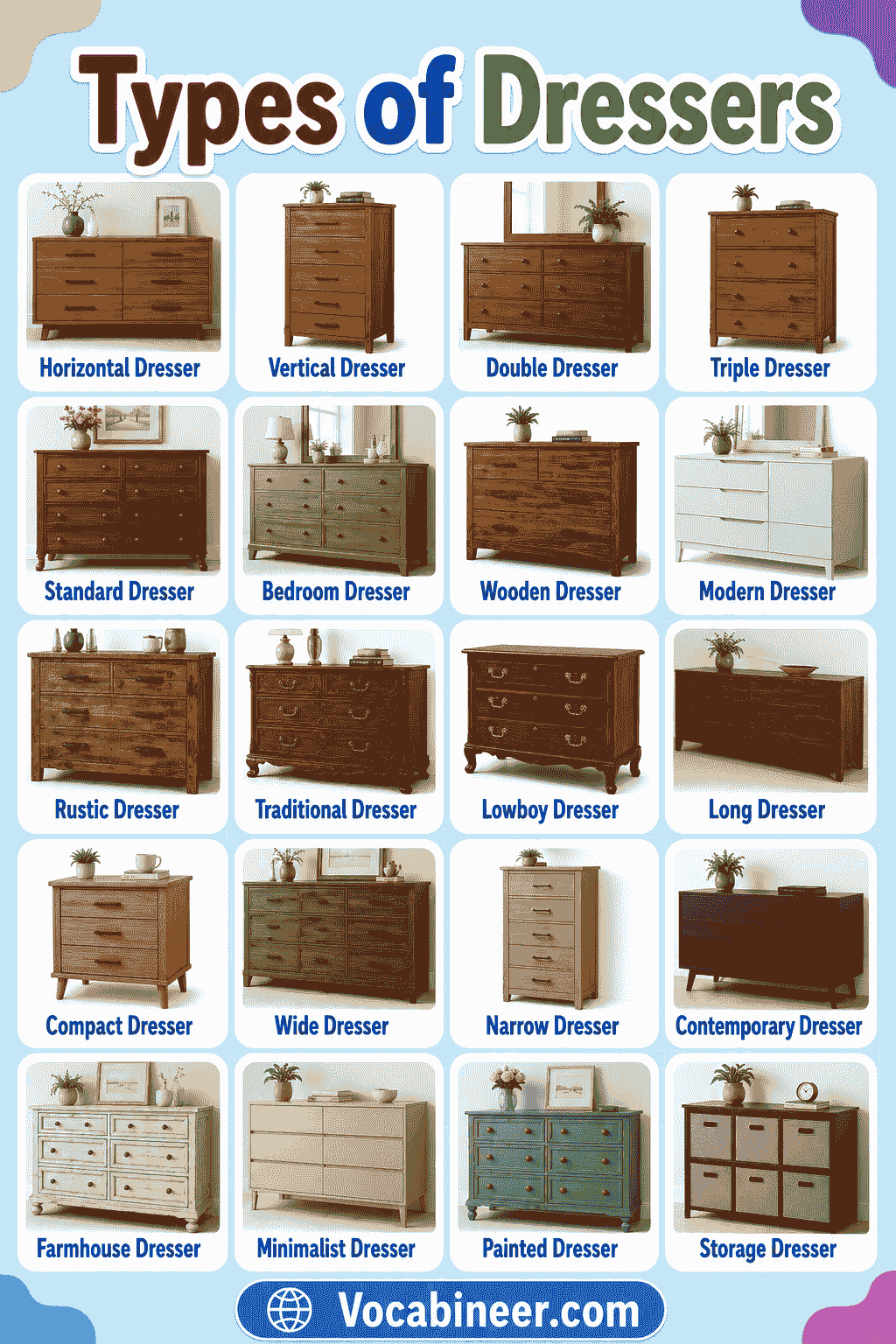
Knowing typical dimensions helps you set realistic expectations and narrow your choices quickly.
Standard Dresser Dimensions at a Glance
| Dimension | Typical Range |
|---|---|
| Height | 30 to 55 inches |
| Width | 35 to 70 inches |
| Depth | 18 to 24 inches |
| Drawers | 6 to 9 |
Most standard dressers fall between 30 and 36 inches high, 50 and 60 inches wide, and 18 and 22 inches deep.
Compare Dresser Types by Size
Different styles serve different room layouts. Here is how the main categories break down:
Horizontal Dressers (30 to 36 inches high, 50 to 70 inches wide)
Low and wide, these work well in large rooms. They offer broad surface area for mirrors, TVs, or decor and suit master bedrooms or media console setups.
Double Dressers (around 30 inches high, 60 to 70+ inches wide)
Extra-wide with two symmetrical drawer columns, perfect for couples who need shared but separated storage. These require significant wall space, so verify clearance carefully.
Vertical Dressers and Tallboys (40 to 60 inches high, 24 to 40 inches wide)
Tall and narrow, these save floor space and fit well in small bedrooms, hallways, or closets. Always anchor them to the wall due to tip-over risk.
Combination Dressers (30 to 40 inches high, 30 to 60 inches wide)
These mix drawers with cabinets or wardrobe doors. Gentleman’s chest models include hanging space and work well for varied storage needs in compact areas.
Small and Bachelor’s Dressers (30 to 40 inches wide, around 30 inches high)
Compact units with 3 to 5 drawers, ideal for apartments, dorms, or placement under windows. Depth usually runs 18 to 20 inches.
Measure Drawer Interiors for Storage Fit
Exterior size determines room fit, but interior dimensions decide what you can actually store.
Interior Drawer Depths
- Shallow drawers: around 14 inches (socks, accessories)
- Deep drawers: 18 to 24 inches (jeans, sweaters, folded bedding)
Usable depth is always 2 to 4 inches less than exterior depth because of the back panel and drawer mechanism.
Drawer Heights by Function
| Drawer Type | Interior Height | Best For |
|---|---|---|
| Shallow | 4 to 6 inches | Underwear, jewelry, socks |
| Medium | 6 to 8 inches | T-shirts, blouses, folded shirts |
| Deep | 8+ inches | Jeans, sweaters, towels |
Check product specifications or measure inside directly. Do not assume all drawers are equal in size.
Match the Dresser to Your Room
Choosing the right dresser type for your space prevents crowding and maximizes function.
Small Bedrooms (Under 10 by 10 feet)
- Best choice: Vertical dresser or bachelor’s chest
- Maximum width: 24 to 40 inches
- Why: Saves floor space and keeps the room feeling open
- Design tip: Light finishes and slim legs enhance airiness
Large Master Suites (12 by 14 feet or larger)
- Best choice: Double or wide horizontal dresser (60 to 70+ inches)
- Why: Balances wall space and offers ample storage for two people
- Bonus: Wide top surface for lamps, photos, or a mirror
Low Ceilings
- Best choice: Long or horizontal dresser (around 30 inches high)
- Why: Keeps visual weight low and avoids crowding vertical space
High Ceilings
- Best choice: Tallboy (44 to 60 inches high)
- Why: Fills vertical volume and prevents a floating furniture look
Avoid Common Measurement Mistakes
Small oversights often lead to big problems. Watch out for these frequent errors.
Forgetting Protruding Hardware
Knobs, pulls, or decorative edges can add 1 to 2 inches to the depth. If your clearance calculation excludes this, drawers may hit the bed when opened. Always measure the dresser including handles.
Ignoring Baseboards
Baseboards can be 3 to 6 inches deep. If the dresser does not sit flush against the wall, it extends further into the room. Measure from the baseboard face, not the wall behind it.
Overlooking Door Swings and Vents
A dresser placed in a closet doorway’s swing path blocks access. Placing it over a heating vent reduces airflow and risks warping the wood. Mark door arcs with tape before measuring and check HVAC vent locations.
Skipping the Diagonal Check
A 36-inch-wide dresser will not fit through a 34-inch door unless you tilt it. If the diagonal is too long, it will not turn the corner. Measure the diagonal and compare it to hallway turns and stairwell clearances.
Use a Dresser as a TV Stand

Yes, a dresser can function as a TV stand, but only if it meets specific criteria.
Requirements for a Dresser TV Stand
- Height: 30 to 40 inches (eye level when seated)
- Width: Wider than the TV base with at least 2 to 4 inches overhang per side
- Surface: Flat, sturdy, and free of obstructions
- Cable management: Look for back cutouts or plan to drill your own
Avoid top-heavy dressers and anchor them if the TV is large. Horizontal or double dressers with a wide, low profile work best.
Anchor Tall Dressers for Safety

Tall, narrow dressers are top-heavy and can tip if multiple drawers are opened or if a child climbs them.
Prevent Tip-Overs
- Use anti-tip kits (included with most dressers)
- Anchor to wall studs, not drywall anchors alone
- Install kits immediately upon assembly
- Teach household members to open only one drawer at a time
Thousands of tip-over incidents are reported each year. Anchoring is not optional for vertical chests.
Final Checklist Before Buying
Run through this quick verification list before completing your purchase.
- Width: Wall space minus 2 inches buffer is greater than or equal to dresser width
- Depth: Clearance zone (36 inches) subtracted from room depth
- Height: Fits under window or leaves room for mirror or TV
- Hardware: Knobs and pulls included in depth measurement
- Entry path: Dresser diagonal is less than doorway or hallway diagonal
- Obstacles: No blocking of vents, outlets, switches, or doors
- Storage match: Drawer depths and heights suit your clothing
- Safety: Anti-tip kit available and wall anchoring planned
Frequently Asked Questions About Measuring a Dresser
What is the standard depth of a dresser?
The exterior depth typically ranges from 18 to 24 inches, with 18 to 22 inches being most common for modern units. Interior usable depth runs 14 to 18 inches. Antique dressers may be shallower at 16 to 18 inches.
How much clearance is needed in front of a dresser?
A minimum of 36 inches is recommended to allow drawers to open fully and provide standing room. In very tight spaces, 30 inches is the absolute lower limit, though 36 inches is far more comfortable.
How do you measure a dresser for a small bedroom?
Measure the wall width and subtract 2 inches for clearance. Measure the depth from the wall to the bed and subtract 36 inches. Prioritize vertical dressers or bachelor’s chests with widths between 24 and 40 inches to save floor space.
What is the diagonal rule for moving furniture?
The diagonal rule refers to measuring from one corner of the dresser to the opposite corner. This diagonal length determines whether the piece can be tilted and maneuvered through narrow doorways, stairwells, or around tight corners where a straight fit is impossible.
Can a dresser be used as a TV stand?
Yes, provided it sits 30 to 40 inches from the floor (eye level when seated) and is wide enough to support the TV base with some overhang. Horizontal dressers are ideal for this purpose.
How do you measure drawer interiors?
Open the drawer and measure from the inside back panel to the front edge for depth. Measure from the bottom of the drawer to the top of the drawer face for height. Remember that usable space is always 2 to 4 inches less than the exterior depth due to construction.
Key Takeaways for Measuring a Dresser Correctly
Learning how to measure a dresser properly comes down to three core principles. First, always measure your space before shopping, including wall width, front clearance, and overhead obstacles. Second, capture the dresser’s full dimensions, including hardware and diagonal length for delivery. Third, match the dresser type to your room size and storage needs to avoid overcrowding or wasted space.
Your next step is simple: grab a tape measure and run through the checklist in this guide before browsing dressers. With accurate numbers in hand, you will choose a piece that fits your room, your storage needs, and your delivery path on the first try.


