How to Fold Jeans for Shelves
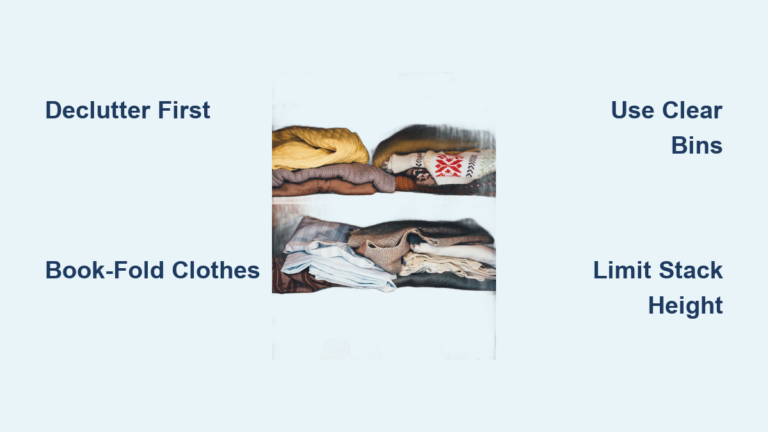
You’ve probably experienced it: opening your closet to find a collapsed pile of denim, desperately searching for your favorite pair while everything topples over. Storing jeans on shelves without a proper system creates messy stacks, hidden favorites, and constant frustration. The solution is learning how to fold jeans for shelves the right way. This method creates compact, wrinkle-resistant rectangles that stack neatly, stay visible, and transform your entire closet organization. In this guide, you’ll discover step-by-step folding techniques, the best storage methods for different shelf types, and expert tips to keep your denim looking fresh and accessible.
Fold Jeans in Three Simple Steps

Master this universal folding method to create stable, stackable rectangles that resist creasing and stay organized.
Lay Jeans Flat and Smooth
Start with a clean, dry pair of jeans. Place them front-side up on a flat surface like a bed or table, with the waistband at the top. Align both legs so the outer seams and hems match perfectly. Close any zippers, empty all pockets, and smooth out wrinkles with your palms. This prevents bulges and ensures a clean, even fold.
Pro Tip: For stiff or thick denim, press gently along the thighs and seat to flatten the fabric before folding.
Fold Legs Together Down the Center
Grasp one leg and fold it over the other along the inner seam. Match the hems and side edges precisely so everything aligns. The back pockets will now face either inward or outward. Choose outward-facing for easy identification when stored.
Smooth the fabric again to remove any air pockets. This single-layer panel becomes the foundation for a tight, stable fold.
Choose Your Final Fold Style
The way you complete the fold depends on your shelf depth and denim thickness.
Fold in Thirds for Thick or Heavy Jeans
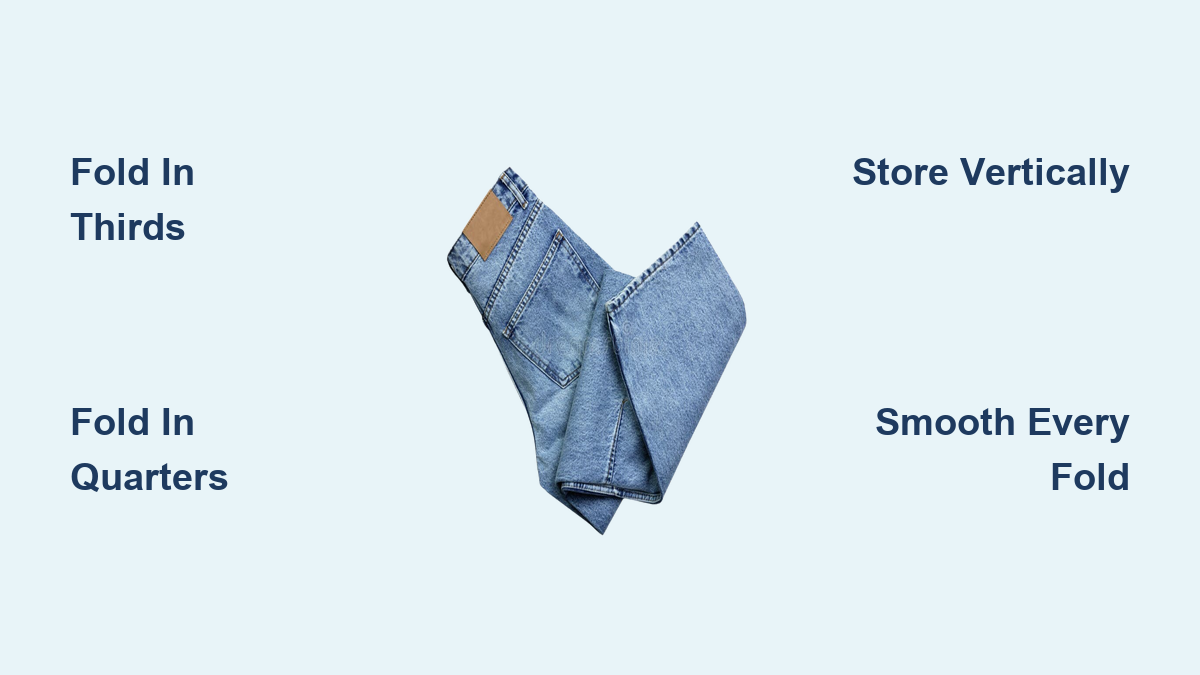
This method works best for deep shelves and heavyweight denim. Lift the bottom hem up to just below the waistband, about two-thirds of the way. Then fold the waistband down over the bottom fold. The result is a compact, triple-layer rectangle that stacks neatly and resists tipping.
Best for: Bootcut, relaxed fit, or raw denim.
Fold in Quarters for Slim or Shallow Storage
Use this approach when shelf space is limited or jeans are slim-cut. Fold the bottom up to the midpoint, then fold again so the waistband meets the new bottom edge. For longer legs, repeat once more.
Best for: Skinny jeans, narrow shelves, or packing cubes.
Expert Note: If the fold feels too bulky, fold the crotch inward slightly before the final fold to reduce width.
Store Jeans Vertically Like File Folders
Keep every pair visible and accessible with upright storage, popularized by the KonMari method.
Use Bins for Vertical Filing
Place folded jeans upright in a bin or box, similar to files in a drawer. This prevents digging through stacks and keeps everything tidy. Choose rectangular bins that fit snugly on your shelf. Open-top containers allow quick access, while labeled bins help sort by style, color, or frequency.
Visual Tip: Arrange jeans in color order, lightest to darkest, for a clean and curated look.
Rotate Pairs for Even Wear
To prevent creases from setting in, rotate the front and back pairs every few weeks. This also ensures even usage across your entire collection and extends the life of your denim.
Stack Jeans Flat for Deep Shelves
Maximize space on wide, deep shelves with horizontal stacking.
Limit Stacks to Five Pairs
Keep stacks no higher than five jeans to prevent toppling. Place heavier or more frequently worn pairs at the bottom, lighter ones on top.
Warning: Over-stacking crushes lower jeans and creates deep creases that won’t fade.
Alternate Fold Direction for Stability
For extra stability, flip every other pair so the waistband faces the opposite direction. This interlocks the stack and reduces slippage.
Use Bins and Baskets for Clean Storage

Contain folded jeans neatly while protecting them from dust.
Choose the Right Basket Size
Pick collapsible fabric bins or woven baskets with a snug fit. Leave one to two inches of clearance on all sides to avoid overcrowding. Measure shelf height before buying containers. Bins should sit just below the shelf line for a streamlined appearance.
Pro Tip: Use bins with removable lids for seasonal storage or infrequently worn pairs.
Label for Easy Identification
If the basket fabric isn’t see-through, label it with style, color, or frequency. Use fabric tags or chalkboard stickers instead of adhesive labels that peel off.
Try the Rolled Method for Tight Spaces
Roll instead of fold when space is extremely limited.
Roll from Hem to Waistband
Lay jeans flat, fold in half lengthwise, then roll tightly from the bottom up. Tuck the waistband last to secure the roll. Place rolls side by side in a shallow bin or packing cube.
Best for: Travel, dorm rooms, or narrow shelves.
Benefits of Rolling
- Reduces knee and thigh creases
- Creates uniform shapes for tight spaces
- Makes individual pairs easy to see and grab
Note: Rolling works best with lightweight or stretch denim. Thick jeans may unroll if not packed tightly.
Adjust Folding for Men’s or Wide-Leg Jeans
Slim down bulky folds for better shelf fit.
Fold the Crotch Inward
After aligning the legs, pinch the crotch seam and fold it inward by one to two inches. This narrows the profile and helps fit more pairs on narrow shelves.
Ideal for: Men’s jeans, oversized fits, or wide-leg styles.
Fold in Half First, Then Thirds
For very long legs, fold the jeans in half at the knee before applying the standard third fold. This prevents overhang and keeps the stack uniform.
Organize by Color or Style
Turn your shelf into a functional display.
Sort by Color Gradient
Arrange jeans from lightest to darkest: white, light blue, medium wash, dark wash, black. This creates visual harmony and makes matching outfits easier.
Pro Tip: Store new or rarely worn pairs at the back to keep daily favorites accessible.
Group by Fit or Wash
Separate jeans into categories such as skinny, straight, bootcut, and wide-leg. You can also divide by wash: raw, distressed, black, or colored. Use different bins or shelf sections to maintain order.
Prevent Wrinkles and Damage
Keep jeans looking fresh with smart folding habits.
Smooth at Every Step
Always smooth the fabric after each fold. Skipping this step traps air and creates permanent creases. Use the heel of your hand to press seams flat, but never crush or over-press, which can damage the fabric.
Store Dry and Clean
Never fold damp jeans. Moisture leads to mildew and stiffness. Always ensure jeans are fully dry after washing before folding.
Good to Know: Light creases fade naturally when worn. Ironing is rarely needed for denim.
Avoid Common Folding Mistakes
Steer clear of errors that ruin neatness and accessibility.
Don’t Mix Folding Styles
Using different folds, some rolled and some folded, creates visual clutter and uneven stacks.
Fix: Pick one method and apply it to all jeans on the same shelf.
Don’t Overpack Bins
Forcing too many jeans into a bin causes distortion, deep creases, and difficulty retrieving pairs.
Rule of Thumb: Leave one-half to one inch of breathing room on all sides.
Don’t Skip the Purge
Before folding, take ten minutes to edit your collection. Remove jeans you haven’t worn in six to twelve months. Fewer pairs mean better organization and more space for your favorites.
Measure Shelves Before Folding
Ensure your folded jeans fit perfectly.
Check Shelf Depth and Height
Measure your shelf depth to ensure it accommodates folded width with one-half inch clearance. Measure shelf height to ensure it fits the bin plus the tallest fold. A standard folded jean is about six to eight inches tall. If your shelf has nine inches of height, a two-inch bin works.
Pro Move: Test fold one pair and place it on the shelf with the bin to confirm fit before organizing your entire collection.
Bonus Tips for Long-Term Success
Keep your system working with these smart upgrades.
Use Shelf Dividers
Insert adjustable fabric or acrylic dividers into bins to separate categories like black versus blue or work versus casual. This prevents pairs from toppling and keeps groups intact.
Add Accessories to Bins
Dedicate a small corner of the bin to rolled cuffs, thin belts, or denim care kits. Maximize space without creating clutter.
Adapt for Travel
Use the same folding method when packing. Folded jeans take less space and stay neater than rolled ones in luggage. Place folded jeans along the suitcase wall to create a stable base for other clothes.
Hang Only When Necessary
If you prefer hanging, use clip-style hangers and attach them to the hem, not the waistband, to prevent stretching. This works best for dressier jeans or pleated styles, not everyday denim.
Frequently Asked Questions About Folding Jeans for Shelves
What is the best way to fold jeans for shelf storage?
The best method is to fold jeans in thirds for thick denim or quarters for slim cuts. Lay the jeans flat, fold one leg over the other, then fold the bottom up to two-thirds of the way and fold the waistband down over it. This creates a neat rectangle that stacks stably.
How do I prevent jeans from creasing on shelves?
Smooth the fabric at every fold step to remove air pockets. Never fold damp jeans, as moisture creates permanent creases and mildew. Limit stacks to five pairs to prevent crushing, and rotate pairs occasionally to distribute pressure evenly.
Should I fold jeans with pockets inside or outside?
Fold jeans with back pockets facing outward for easy identification when stored. This lets you see the color and style of each pair without pulling them out of the stack or bin.
Can I roll jeans instead of folding them for shelf storage?
Yes, rolling works well for tight spaces, travel, or lightweight denim. Roll from hem to waistband and place rolls side by side in shallow bins. However, rolling is not recommended for thick or heavyweight jeans, as they tend to unroll.
How many jeans should I stack on one shelf?
Keep flat stacks to no higher than five pairs. Over-stacking causes lower jeans to become crushed and creates deep creases that are difficult to remove. For vertical filing in bins, ensure each pair stands upright without being squeezed.
Key Takeaways for Folding Jeans for Shelves

Mastering how to fold jeans for shelves transforms your closet from chaotic to organized. The three-step folding method, using either thirds or quarters depending on your denim thickness, creates stable rectangles that stack neatly and resist wrinkles. Vertical filing in bins offers the best accessibility, while flat stacking works well for deep shelves. Always smooth fabric before each fold, store jeans completely dry, and limit stack height to five pairs to prevent creasing. Sort by color or style to create a visually appealing system that makes getting dressed easier. With consistent folds and proper containers, your denim collection stays accessible, wrinkle-free, and organized for years to come.